


Vacuum Sealing Machines for Jars
Automatic Sealing Technology with Steam Injection or Cold Vacuum
Vacuum sealing machines seal jars with Twist-Off lids while creating a defined vacuum inside the package.

Vacuum Sealing Machines at a Glance: Which Technology Is Right for Your Product?
In the industrial processing of food in jars, different methods are used to create the vacuum.
We offer two sealing technologies for twist-off jars:
Vacuum sealing with steam injection
This process uses steam during the sealing process. After sealing and cooling, the steam condenses inside the glass, creating a vacuum.
Cold vacuum sealing without steam
In this process, the negative pressure is generated during the sealing process without steam injection.
Both technologies enable automated sealing processes. The choice depends on the specific production requirements.
Vacuum Sealing Technology – Canning Jars | Continuous Band Sealer for Jars with Steam Injection
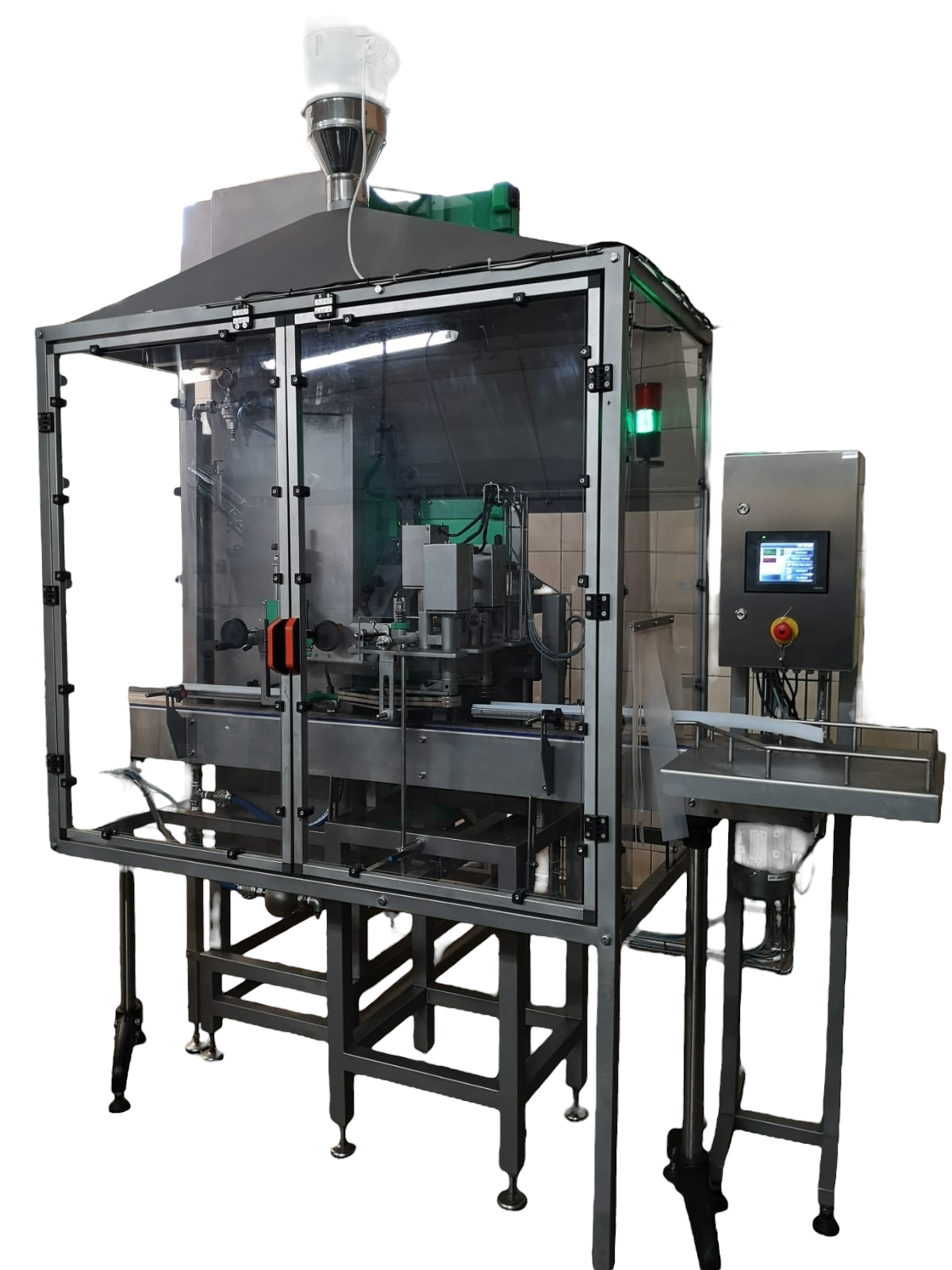
Cold Vacuum Sealer (Without Steam)
Screw Cap Feeder

Technical Data: Lid Feeder / Capper
Vacuum Tester for Jars – Closure Inspection During Production
Automatic Post-Sealing Inspection
In addition to generating a vacuum, checking the sealing result also plays an important role.
The vacuum tester checks jars after sealing to ensure they meet the specified inspection criteria.
The system offered by M4FI uses sensors positioned above the conveyor. Jars that do not meet the inspection criteria can be removed from the production flow by a side-mounted reject unit.
The sensor position can be adjusted to accommodate different jar heights.
Benefits of Automatic Vacuum Inspection

- Checks sealing results during production.
- Automatically rejects jars that do not meet the inspection criteria.
- Integrates with existing conveyor systems.
- Sensor position adjusts to accommodate different jar heights.
A vacuum tester complements the sealing process but does not replace the required inspection and validation of the entire manufacturing and packaging process.
Integrating Vacuum Sealing Machines into Existing Production Lines
A vacuum sealer is often part of a larger filling and packaging line.
Depending on the production requirements, several process steps can be combined: dosing and filling, lid feeding, vacuum sealing, vacuum inspection and conveying the sealed jars onward.
When planning the system, we consider both new production lines and existing equipment and conveyor systems.
The goal is a sealing solution that suits not only the packaging but also integrates with upstream and downstream production steps.
What Information Do We Need to Select Your Vacuum Sealing Machine?
To assess which technology is right for you, it helps to know:
- Product: What are you filling?
- Packaging: What jar sizes and Twist-Off closures do you use?
- Filling temperature: Is the product filled hot or cold?
- Vacuum requirements: What vacuum level is required for your process?
- Production output: How many jars need to be sealed per hour?
- Further processing: Will the jars be pasteurized or sterilized afterward?
- Existing production line: Will the machine be integrated into an existing line?
With this information, we can discuss the technical requirements and suitable sealing methods together.
Frequently Asked Questions About Vacuum Sealing Machines
What is the difference between a vacuum sealer and a standard Twist-Off capping machine?
A mechanical Twist-Off capping machine seals the jar without actively creating a vacuum. A vacuum sealer combines the sealing process with a method for generating a vacuum.
A vacuum can also form as hot-filled jars cool after being sealed mechanically. The overall process is therefore what matters.
Is a vacuum sealer required for pasteurization or sterilization?
That depends on the product, packaging and validated manufacturing process. The sealing technology must be matched to the process as a whole.
A vacuum seal does not replace pasteurization or sterilization.
Can lids be fed automatically?
The continuous band sealer with steam injection is available with lid sorting and feeding. Options for other systems depend on the machine and configuration.
Can a vacuum sealer be integrated into an existing line?
Integration is generally possible, but must be assessed based on the existing conveyor system, jar and lid formats, output and process requirements.
Request a Vacuum Sealing Machine for Your Production Line
Planning a new sealing system or looking to add vacuum sealing technology to an existing filling line?
Machines4FoodIndustry can help you select and specify the right sealing solution for your needs.
Tell us about your product, packaging and required production output. We’ll discuss which vacuum sealing technology is right for your requirements.
Request a Vacuum Sealing Machine Quote Now
Find more sealing methods in our Overview of Sealing Machines.